Tuesday, May 06, 2014

Have You Felt Velvet Lately?*

 *An excerpt from Chaos Down Under. To read the entire story, click here.

This is about the week my life was rocked by a series of major scandals.
No, I am not talking about the time the Russian brunette sent me the message: ‘Can you meet me for a sex?’ on my chat window. That message was understandable; at some abstract level, probably exciting too.
I will come back to the brunette and her message later. There were a handful of events that had unsettled me before this pleasant digression came forth in the form of her message.
It had been nearly a month at the client’s office, and the experience had not been pretty. The uncomfortable equation we shared with Lex had come to the fore with an increased frequency of arguments over the alleged triviality of defects we had been raising in their system only to get the client’s undue admiration and also some extra bills. I had taken major exception to this attack on my integrity and had asked Pat and Mike to stop behaving like cry babies just because we were giving them a tough time for handing the client a phony product. After a flurry of unpleasant emails, Pat had signed off with a cryptic warning that talked about a ‘Bytesphere sunset’. Too much Godfather influence, maybe. Later that evening, Pat ambled over to my desk and winked, ‘Your move, genius!’ The duffer expected me to play into his scheming hands and send an irrational response to his diatribe. I knew better and decided to sleep over this disturbing thought and come up with a well-calculated response.
The next morning I woke up early, upbeat, vengeful and in reasonably good health. I breakfasted sumptuously on a three-egg omelet at Hungry Jack’s and then began strolling comfortably towards office, taking in the serene beauty of the Yarra river. The clock had not yet struck eight and the roads were largely devoid of the morning traffic. It was a perfect start to the morning. All of a sudden, I thought I felt a treble in the distance. It died down in seconds, then rose again with more intensity. The treble grew stronger—a prominent sound of something very heavy drumming against the tar roads with a sense of purpose. And then I felt a dark shadow loom over me. In seconds, a shrill sound that pierced my senses.
NEIGHHHHH!
I turned around, petrified, to find a black horse rise on its rear limbs, raising its intimidating hoofs at me. I cowered. Someone’s voice asked me to calm down. I looked through my trembling palms that had covered my eyes—Jerry was mounted on the beast, taming it with the kind of compassion he never showed us humans at work. I sat cowered, submissive, before my master. Jerry took in the moment with pleasure until the horse held his, well, horses.
‘Meet Velvet,’ he said, proudly fondling the animal’s furry back that smelled of leather. ‘Come, let me give you a ride to work.’
I will admit my resilience against unexpected surprises had risen considerably in recent months. But this was pushing it too far. I had never seen a suited, senior executive ride a horse to work. Hell, I had never seen ANYONE ride a horse to work. What’s more, I was never faced with the uncomfortable situation of being OFFERED a ride on a horse to work. I obviously declined the offer very politely, but Jerry began trotting Velvet alongside me as he persisted, saying it would be an experience I would never forget; what was my problem, was Velvet not good enough for me? When onlookers began sniggering at the proceedings, I finally gave up and agreed. It took me a grand total of ten minutes to be able to mount the stallion. When I had settled down, Jerry asked me to make sure I held on.
‘To what?’ I asked.
‘DUH!’ He shook his head, patting the sides of his waist.
WAS THIS MAN FUCKING KIDDING ME?
Of course he was not. So after a brief debate, I held Jerry by the waist and asked for Velvet to ride us to work in as little time as possible so the ordeal could end for all three of us. For the first few minutes, Velvet walked peacefully. This was the moment I was actually beginning to enjoy the ride. I took in the same view of the Yarra from a good elevation. I felt princely. I could even have considered doing this more often. Only, just then, Jerry shouted, ‘Trot, Velvet! Trot!’
And Velvet began prancing around like a fool, trotting violently along the cobblestone walkway. To another person, this could have looked like fun—like sailing on a magic carpet, or sitting on a nice massage chair, maybe. But I bet anyone on that road a hundred bucks to have tried sitting on that bugger with his two legs apart, subjecting oneself to such violent trotting turbulence. At first I wanted to howl in pain. But gradually, the pain moved upward along my body, travelled through my gut, right into my voice box. Before I knew it, I had lost my voice to protest or to beg to be let off. Then came a reprieve. Jerry’s instruction changed to, ‘Gallop, Velvet! Gallop!’
The positive change brought about by the command was that Velvet had stopped trotting. The negative development was that Velvet had now gone completely cuckoo. He neighed a little at the instruction, shook his nape at a hapless cyclist right next to him, and took off like the wind, nearly toppling the cyclist over. You know how your entire life flashes before your eyes when you have a disturbing premonition? I swear, at that moment, I could even see flashes of my previous birth. I remembered I was a doe. I had had a good life then. I ate herbs and slept all my life and had died peacefully by a pond that had lent me its sweet water for yea…
Velvet was almost flying now. I was systematically crying now. Velvet rode us past the Yarra, right into the city centre where cars were now converging in healthy numbers at various traffic signals. Showing utter disregard for every colour of the traffic light, Velvet went about its purpose. Jerry’s waist was not good enough for me to hold on to now. Desperate to latch on to something, I found Velvet’s fat tail swinging wildly behind me.
‘Faster, Velvet! Faster!’ The idiot continued, tugging at Velvet’s reins. I put the third Newtonian law of motion to use and pulled hard at Velvet’s tail, hoping to offset the insane speed this creature had acquired. Frightened, Velvet galloped faster. Even more frightened, I tugged at his tail even harder. We must have been two hundred metres from the office car park when Velvet gave up and screeched to a grinding halt, sending its buttocks and me a few feet up in the air. I lost my balance, my body executed a perfect parabolic jump and went a few centimetres ahead of Jerry, who showed some presence of mind and held me mid-air, bringing me back down on Velvet. I settled down like a petrified hen, somewhere between Velvet’s nape and Jerry’s torso.
‘It is alright,’ Jerry tried comforting me. ‘We are almost there. Ok, Velvet, WALK!’
The phase from that moment until I was woken up by Dharmesh in the office dormitory two hours later is somewhat of a blur, so I do not remember much. When I stood up from the bed, I felt no bodily sensation waist below. I regained my composure, crawled back to my working bay, and felt a little better after I resumed tutoring the Russian brunette and after sharing a little laugh over the message she had sent me.
Coming back to the brunette and her message: ‘Can you meet me for a sex?’

Friday, April 25, 2014

A Dream To Sell

I have a dream I need to sell, a quick pitch I must make.
Can I have your attention? A few minutes are all it will take.
Yes this ain’t one of the ninety-nine worries you are plagued by,
But I owe this dream my duty, I am afraid I must comply.

This dream tells you a story, it sings you a nice song,
It transports you to a world beyond right and wrong.
Not quite a superhero, it is more of a jester
That thrills and entertains you with a grandiose gesture.

You might find it peeping through a blog or a spam mail,
Or at times its vanity pushes it behind a veil.
But it stays in encrypted links and subtle reminders
Its creator has stepped aside, to your verdict he surrenders.

Don’t look at your watch, I know I have overstayed,
Thank you for lending an ear, my day is made.
Spare a thought for the dream before you turn the other way,
For a hundred unknown stories have shown it the light of the day.


Saturday, March 29, 2014

Big Babies Don't Cry

I commonly hear people complain about babies aboard airplanes. Apparently, these babies cry a lot, and often very loudly and incessantly. Passengers around them often do not take to this too kindly. I completely hear this grouse. Babies need to understand as part of this democracy their obligation towards respecting the needs of their fellow citizens. The fundamental duties, the other side of the coin to fundamental rights, are firmly embossed in the Indian Constitution, on paper. Infants are free to take a look, comprehend and absorb what these doctrines mean. Because if they do not spruce up themselves, some ingenious adults have already begun offering radical solutions to the menace, such as banning young mothers and their bubs from air travel, or more interestingly, drugging babies to sleep during the length of a flight. As I am not entirely in agreement with these solutions, I hereby offer some of my own.
They can try the "mind over matter" mantra, for instance. Flipping through the pages of any self-help book such as "How To Stop Worrying and Start Living", "You Can Win", and "Stop Crying You Sissy", babies will soon learn that physical discomfort is a mere state of mind. Instead of crying over it, they should consider engaging in activities that can take their minds off the pain: look out of the window, sing a Beatles song, or share with your parents your opinion of who should form the next government. If they are into television, which By Jove they would be, they can also try Baba Ramdev's breathing exercises as a combative tool against pain.
If babies refuse to take matters into their own hands, why do mothers not administer some medicine to them right before they board the flight? Mothers often argue it is often difficult to gauge what exactly is bothering the child. This is seriously not acceptable. These infants need to be exposed to some organizational behaviour handbooks at an early age to amply acquaint them with the concept and benefits of transparent and open communication. Nip the problem in the bud. Speak up about issues that afflict you. Proactive problem solving skills, hello! Mothers, on their part, need to encourage an open door policy with their babies, whereby they can freely bring pertinent matters of trouble on the table, that can be negotiated to closure by way of peaceful dialogue.
But please, babies, stop crying. These are early years of your lives. What do you know of worldly problems anyway? I am not sure you are aware of what your co-passenger's day has been like. But let us take merely his escapades at the airport, right before boarding this flight, just to give you a fair idea. He has been taken by surprise by the large queues at the airport which he has never known about before, which is why they were not accounted for in his schedule. Resultantly, he has per force had to stick parasitically to the person ahead of him in the queue in the hope that he can make his way a little faster. When that failed to work, he has also had to vent out his frustration on the airline staff by calling them incompetent mutts who can't get him on to his plane soon enough. With the plane in sight, finally, the poor chap has had to push and jostle his way through the aisle of the plane, because if he does not hurry up, the plane might take off with one of his feet still placed on the tarmac.
After all these hassles, little babies, your co-passenger is looking for some peace of mind. And all he expects from you is that you follow the model code of behaviour which requires you to maintain silence in the aircraft. As responsible citizens, it is imperative that you understand his needs and comply. At any rate, like I said, they are at their wits' end and the solutions they propose to counter your noise might only make you more upset.

Wednesday, March 26, 2014

Watch Out, We Are Engineers


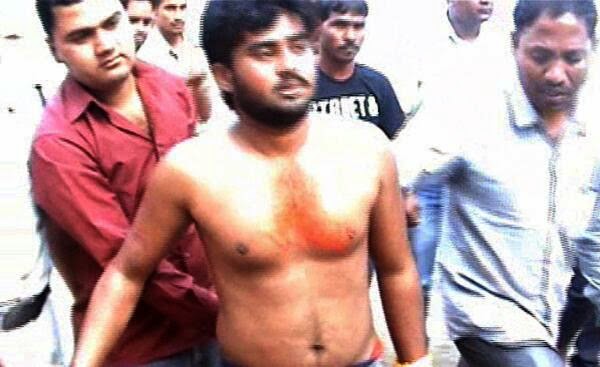
[Picture Courtesy: Hindustan Times]

An engineering student jumped into a tigers' enclosure in a Gwalior zoo this Monday. Taking off his shirt, he then entertained a pair of tigers with a private dance. This youth has been identified as a representative of a million other engineers like him who are in a constant need to remind everyone they inhabit a world outside of Is-this-Mohr's Circle-nonsense-in-the-syllabus. To many others, this might be seen as either a desperate attempt at seeking attention, or a random act of buffoonery. But we engineers know this is but just another manifestation of our keen sense of adventure that we carefully nourish over a period of four years - unless you are given seemingly polite monikers like ATKT ka Raja, in which case years cease to be anything more than a mere integer.
Contrary to popular belief, daredevilry comes easy to the common engineer. This is more commonly known in engineering parlance as "Enter the canteen." Let's get real. It was no miracle that our friend escaped unscathed after spending close to forty minutes before those tigers, apparently called Luv and Kush. This is what had really transpired after the engineer accosted them:

Tiger Luv - "Hey look, chunky food is here. *slurp*"
[The beasts advance towards an unsuspecting engineer]
Tiger Kush - "Wait. Why do I smell watery spinach?"
Tiger Luv - "He must be an engineer. I have heard tales of their canteens. Umm, not hungry any more."
Tiger Kush - "Ditto. Much ado about nothing, hmmpf. Let's just watch him dance...oh, no!"

Of course, facing two tigers is a formidable prospect. But then our engineering friend has been through more. VIVAS, for example. You can pronounce it the way you like, but this word never sounds pleasant. What happens inside a VIVA hall doesn't feel any better either. Imagine lining up in groups of three, anxiously awaiting your turn to get exposed as the chap who landed this course only because, well, "Papa told me." To make matters worse, every group will ask the preceding group "Hey, what were you asked?" only to find out that the professor would never repeat his questions. And God forbid, if you are one of those Smart Alecs who hummed their way through all lab sessions, because, "Hehe, group work," you have so had it when a surprise announcement in the finals states that every student will perform his experiment individually. As our professor once said, "Lab work is team work. It is not some pooja that one person will hold the pooja thali and the others will just touch his elbow."

The engineer doesn't have it easy outside the college premises either. For a new challenge is lurking somewhere round the corner. We call it SOCIALIZING. Consider this: the poor fellow is sitting at home during a study break. The parents have to attend a social do. The engineer contemplates an evening all to himself - some quality "me" time before his laptop. News suddenly pours in that the hosts have learnt the engineer exists and that the parents must totally bring him along. Dragged to the dinner with an assurance that "We just have to eat and come back, beta", he is now strolling around the party lawns, probably examining the lights and wondering what diodes lie behind them. Other guests accost him, prodding him to make conversation.

"So, nice party, eh?"
"Meh."
"So what are your hobbies?"
"I am an engineer. My hobbies are writing tutorials, online chatting and..."
"Come, let's get some dinner."

If the conversation is with a girl, the conversation begins and ends somewhere around "Hi I am an engineer baby are you receiving the signals being sent from the transducer of my heart."

Everyone went about asking what happened to the engineer finally inside that enclosure? It is absurd that nobody bothered finding out what happened to those tigers after spending forty minutes with him. Rumour has it the engineer had not slept in four days. With the overwhelming burden of an entire society on his shoulders, it was gracious of the engineer to afford them a little dance. My message is to the tigers: when you are met with an opportunity as rare as this, sit back and behave yourselves. You are lucky to have got an audience. You are not going to see him again until the next semester.

Thursday, November 14, 2013

The One Question Sachin Tendulkar Cannot Answer


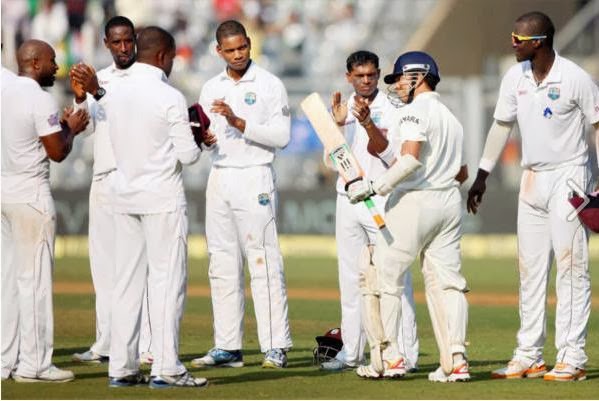
Miles away from Bombay, I was stirred last evening by a loud roar. India had lost its second wicket at the Wankhede. A predominantly Indian crowd was cheering at the fall. This was not unexpected. Nor was the cold wave of nervousness that I stayed engulfed in for the next two hours. I had felt this chill often over the last twenty years.
The giant screen at the stadium yelled, “DON’T EVEN BLINK!” Not today, I didn’t. In fact, I never blinked when the great man batted. Did they not know I was the boy my mother always thought was obsessed with his hero? Over the last few months, her theory was disproved. The hero was an international obsession.

When Sachin Tendulkar came out to bat one final time, seemingly unfazed by the hysteria around him, my pulse dipped. I did not care what he was going through. He knew better about dealing with pressure. But I have never known how to deal with the agony every time he has walked off the field. Yesterday, I noticed this more than ever before. ‘Watch him play one last time,’ I told myself; instead, I lost context and travelled back in time.

1992:
I knew little about cricket, except that I knew his name. My father had told me about a boy called Sachin who had recently taken the wind out of an English team’s sails at Old Trafford and was on his way to doing something similar with the Australians in Sydney. I was made to watch the game. Ravi Shastri walked down the pitch to congratulate this boy as he raised his Power-labelled willow to acknowledge the applause. The image still lingers. 

I began following the game because I was intrigued by Tendulkar. The World Cup followed. India disappointed, Tendulkar did not.
Yes, for me, Tendulkar had already become bigger than the game.

1993:
The blistering form continued. My faith was reiterated. I returned from school one afternoon, I had won an inter-class elocution and I needed to tell my folks. But Tendulkar had scored 150 against England and was going strong. I forgot all about my victory, it did not feel important any more. He lasted only another fifteen runs. A tacit home rule was soon implemented. I was to take ill every time India played a cricket match. I would watch Sachin bat, then recover miraculously, and then be driven to school. My parents did not mind, my teachers pretended to not observe my sickness patterns. That summer, I enrolled in a cricket camp, where our coach often asked us about our inspiration. ‘Are you kidding me?’ I always wanted to ask in response.
The answer was plain obvious.

1994:
I was nursing a fever. I was upset because it was Holi and my illness meant I was not to partake in the celebrations. Sidhu took ill as well, Sachin Tendulkar replaced him, scored a memorable 82 against New Zealand and changed the face of Indian cricket forever as he sealed his spot as an opener.
It was the best fever I ever had.

1996-1998:
The images from this period are somewhat blurred. He was the star of the World Cup, only to once again be let down by the rest of the team that did not really matter to me. Later, his captaincy invited some negativity from the media. I lost faith in the media but never lost faith in him. He peaked again in 1998 at a time when we had just moved to a new house. We had not unpacked, but a television was plugged in with urgency because Tendulkar was now plundering Pakistan in the Independence Cup. My board exams were nigh, but I could not care less. 95 off 78 balls, 67 off 44 balls, 41 off 25 balls, this man stopped at nothing. The board exams were taken sincerely, all was well.
He resurfaced in Sharjah as if to say, ‘You have been a nice boy, let me treat you to some wonderful sixes over these bowlers’ heads.’

I still watch Youtube videos of those two innings, and I pause the clip at the instant I hear Tony Greig scream, ‘What a player…that’s gone miles, it’s dancing on the roof!’

1999-2001:
Sachin Tendulkar lost his father during the World Cup. Surely, everyone felt his pain. But we had still not measured his true courage. I had seen it in the movies. The wounded hero returns to the warfront to avenge his circumstances. Tendulkar replicated every inspirational legend we had ever heard in a single innings against Kenya.
Against yet another World Cup failure, against the match-fixing scandals that riddled our motivation towards the game, against the chaos in my teenaged mind, Tendulkar continued to give me hope. Whatever may have been the question, Tendulkar was always a reasonable answer. When he became the first man on the planet to cross 10,000 runs in one-dayers a year later, I finally began to wonder:
Was this the final countdown, or was it just the beginning?

2003-2007:
Sachin Tendulkar’s promise of performing in World Cups continued and how. The ‘beta aur baap’ legend followed the smoothest six ever hit off a fast bowler. A mistimed shot in the final match was an anti-climax; pictures of fans in tears flooded the news headlines the next morning. A double century a year later at the SCG, and the World Cup was forgotten.
Darker times beckoned. I did not know what a tennis elbow meant, except that it potentially meant the party was over. Or so the critics seemed to suggest. Fake articles announcing that Sachin Tendulkar had called it a day were doing the rounds. He returned yet again – 93 off 96 balls against Sri Lanka – and let everyone know that he was altering not just the nature of the game but also his own destiny. India faced a most ignominious ouster from the 2007 World Cup. Critics lunged at him again. For once, I had no means to snap back at whoever said, ‘This guy should just retire now.’ But with the series that followed against England, his return to form ensured I did not need to bother any more.
I had got my answer. This was but the beginning.

2008-2011:
‘Impossible is nothing,’ he said in an Adidas advert. He meant every bit of it. Centuries galore in Australia, a series win in the ODIs driven by his remarkable scores, and that near-impossible Test victory against England that rode on the back of his tribute to the victims of the terror attack – the hero had now transcended all realms of reality. Two months before he created history with that ODI double century, a friend asserted, ‘I do not think this man can ever go wrong. The only time he can fail going forward is when he chooses to.’ He said it had been his dream to lift the World Cup. I wonder if he saw that he was speaking on behalf of a million others…

…I was snapped out of my reverie. Back to Wankhede. Tendulkar struck that familiar straight drive off Sammy. Of course I will continue to cheer for him over the next four days. But how do I detach myself from this memory? This is one question even he doesn’t have the answer to.


Saturday, September 14, 2013

The Economics Of Heartache

While recently conducting a survey as part of my research on the next book, I asked around what the youth thought were their burning issues today. (I don't actually use all this research, but it makes me feel smug). Around seventy-one per cent* responded with "Heartache". At the outset, this response can be promptly classified into one of frivolity or inadequacy of pathetic life experiences. Especially if it comes from teenaged boys whose moustaches still look like they are made of goat fur. But if I delve into my own enriching years that belie my youthful countenance, I realize heartache is a real and potent wreckage of the mind. Worse, it is cyclic and permanent.
I must have been fifteen when I was first victimized. I didn't even have goat fur for a moustache, although some semblance had been offered thanks to a razor that otherwise lay useless in my Biology class' dissection kit. A friend who had been through the drill suggested I cope up by locking myself in a room and play intense music on a guitar to purge out the sadness. It sounded like a great idea, except that I didn't know how to play a guitar. Ronnie from school lent me his Gibson very kindly. I learnt a few chords, played intense music, so intense it snapped Ronnie's guitar strings. The heartbreak was successfully transferred to Ronnie, I had found my catharsis and had thought I had conquered a wounded heart.
But it always came back. In the alienation from a social circle, in the job that did not get me a Jaguar, in a dream yet unrequited, in Sachin Tendulkar's retirement, in the Zanjeer remake. Well, what doesn't kill you only shows you a pattern. The presence of hope lying beyond dismay. The realization that bad as it may have gotten, there can be worse later. The relief that your neighbour's unhappiness is bigger than yours. The empathy for the person who chose to end it all with one big leap, who chose not to wait for the happy interludes in the ballad of distress.
Wait for the happy interludes. They don't just give hope. They give us a sense of humour, and if we get that far, they also help trivialize a heartbreak of the past. I guess this is our best shot at countering it. For when we look in the mirror, the stubble will have thickened. And soon it will grey. But despair will continue to peer over our shoulders, challenging us to make the next move.

*Just corroborating my argument with a useless statistic.

Saturday, August 10, 2013

Why So Serious?

Rohit Shetty can never have it easy as a maker of comedies. Being humoured, unlike other states of mind such as outrage, idiocy and the recently discovered poverty (Poverty IS a WHAT?), is a tricky affair to understand and there is no science to it. Making a joke is a difficult art, because your joke has varying standards set against it before it is dispensed and it is nearly impossible to cater to your recipients' myriad tastes.
Imagine the perils of being a stand-up comic, for instance. Firstly, there are far more people who want to stand up and deliver comedy than those willing to sit down and receive it. Not more than a tenth of these comics probably read into their audience's psyche before making a joke. Secondly, the audience's psyche is way too complex to make sense of it, which is why a whole lot of jokes fall flat much to the teller's embarrassment. Admit it. Your childhood has most certainly been riddled by that one birthday party where your mother coaxed you into telling "that chutkula" and the only trickle of claps that followed were from your mother.
Being successfully funny is subject to various factors such as socio-cultural sensitivities, tone modulation and the innate human desperation to run down anyone who has found a podium to showcase his talent. The kind of adverse reactions one has to often face from one's audiences arguably explains why the best of comedians have seldom smiled in their personal lives - prime examples include Ben Stiller, Charlie Chaplin, Paresh Rawal, Sreesanth, etc. Of course, some comedians are to blame too, for they carry the same joke wherever they go. Consider the "How do you put a giraffe into a fridge" gag. It might work with Indians. Europeans will find it bizarre. The Chinese might run away mid-narration in search of a camera so they can photograph the giraffe. The Americans won't get to hear your joke because you will likely be detained at an airport because of your fetish for placing suspicious objects in fridges.


Maybe, as many an expert might argue, the safest option for a comedy is to be topical and relevant to existing issues. And maybe Rohit Shetty could consider paying heed to such a suggestion.After all we have so many hot subjects to choose from daily: Narendra Modi, Rahul Gandhi, #Feku, #NaMo, #RahulBaba...But Rohit Shetty knows better. He defines his genre, opens it to you for acknowledgement, and does so pretty successfully more often than not. He plays to his strength, which is pure, low-brow entertainment at the cost of logic. With Chennai Express, he goes an edge gutsier by bringing in Shahrukh Khan who is your average Joe's favourite punching bag (dissing whom is never going out of vogue). So, yes, he gives you a car that can be somersaulted by a human fist. He can get a blind man to read you the time. Diwali is spelt 'DDLJ' in his world. You are free to enter or stay off limits.
The world is pissed off. It needs to be made to laugh. If you are looking for polished humour, there are enough artists playing to your gallery. For many others, there is Rohit Shetty. Neither can grudge the other his choices. 


Saturday, August 03, 2013

Tutored By The Temptress


‘An ideal story is the one that writes itself,’ Nakul signed off at the conclave, swaying between flippancy and intensity. Being flippant came easy to him, as would vouch his family, friends and others who were neither of the other two. What else would you say of a young man in a conservative Indian society, who renounced a plush job for the dark labyrinths of a writing career? His parents reckoned they had been too soft on him; he had not seen hardship. The value of financial security eluded him. To Myra, the woman who had claimed to know him better than he knew himself, this was a tactic to evade their wedding nuptials. He would have her examined for paranoia, but that could wait. At this time, he was not willing to barter his dreams for social approval. Today, the acknowledgement he received at the Young Turks’ Literary Conclave in Switzerland seemed to answer his detractors.
‘This is only the beginning,’ argued Cecilia, between mouthfuls of her secret recipe of the evening. ‘And don’t bother answering your detractors. Vengeance is but a constriction en route creativity.’
Nakul nodded politely. Inwardly, he marveled at the girl’s dexterity with words. He also decided she was remarkably intelligent for a housekeeper at a countryside bed-and-breakfast. She was amused when he opened up to her about his notions, later that week. In his defense, housekeepers in India were not perceived to be intelligent. A person’s capabilities were judged per the choices he made.
‘Your choices are your fetters,’ she laughed. He was inadvertently drawn to her as she regaled him with stories of her limited choices; the orphanage she had grown up in had been kind, but not inspiring. When she took a liking to demonology, she was banished from the orphanage and ostracized by the local church. With meager belongings and fewer choices, she set out in pursuit of her passion. It had been a mad long journey, and she was still traveling. Scathed, and her financial condition leaving a lot to be desired, she was still content with living her dream. She told him of her recent adventure - the exorcism of a middle-aged farmer in a Scottish village. What looked visually devastating proved spiritually enriching for her.
The morning he was leaving, she walked him to his cab. He did not want to go. She had inspired him when no one else had shown a semblance of conviction in his decisions.  She leant into him and kissed him. He remembered the firmness in her eyes as she said, ‘If you find my inspiration worked wonders, come back and tell me how.’
Once back home, he started writing his first novel. To his dismay, he did not have a story on him. He sat doggedly at a corner of The Bombay Café for weeks at end, staring out the window, watching people pass by, scanning their motley expressions for a stroke of motivation. But nothing yielded.  He could not get over his memories of an unfaltering Cecilia, and the diktat of fulfilling a dream she had issued to him. Possessed by her, he spun a story around a young Indian’s rendezvous with a demonologist he fell in love with – a story that found few takers in the market.  When a dying publication sourced his manuscript with a frail attempt at redeeming its business, its owner fell in love with the outlandish plot and decided to publish it.
A year later, Nakul had found readers aplenty. His debut project, Tutored By A Temptress, had recorded massive sales and myriad responses that ranged from awe to vitriol. He had detached himself from the story the day he had launched it to market; the woman he had attributed it to seemed to have been an illusion. The emails had all bounced back. The phone number he had was now out of service. But when he was couriered the program booklet for the upcoming Frankfurt book fair, he was left reeling. The brochure, in its listed bestsellers, had pipped psychologist Gerald Bond’s “Meandering Minds” on the top spot. The synopsis talked about the doctor’s tryst with a certain Cecilia Gomes, whose imaginative identities had shown her around the world. Last found in a gypsy band traveling across the African deserts, she was previously known to be an aspiring demonologist who had fallen hopelessly in love with a young Indian who had taught her how to smile. Of the countless cases of multiple personality disorders that he had encountered, this one stunned him with the rapid changes he saw in this woman…
Nakul flung the brochure on his bed with a trembling hand. Somewhere, he heard his own words ring out loud: ‘An ideal story is the one that writes itself…’

Monday, July 08, 2013

The John Inverdale Guidebook To Appropriate Insulting Technique

BBC presenter John Inverdale is facing the heat over his sexist remarks made on air against the recently crowned Wimbledon champion, Marion Bartoli. Inverdale reckons Bartoli is not much of a looker. This has invited widespread public ire - by which I mean, 674 complaints to BBC demanding Inverdale's ouster over this WHAAATTT?

674 complaints, are you kidding me? Is this all you got after making news headlines with that comment? One of Bartoli or Inverdale, and I am confused at this point who, doesn't invoke impressive mass outrage. Consider Govinda, for the sake of argument. The poor chap has received at least Govinda times as many slanderous remarks on his appearance all his life (I am talking only about the ones I have been privy to) when they barely even find room in the gossip columns of newspapers.
Of course, sensible arguments will point out that making jokes on Govinda's appearance can never be a big deal, because that doesn't amount to being sexist. Except under certain rare circumstances, of course.

In that completely logical view, Inverdale's horrendous mistake of making disparaging remarks about a woman's looks needs to be taken very seriously, and I am more than willing to sign any petition floating around that demands his immediate transfer to India TV. Or even better, place him in intensive training under the Sly Commentary at Indian Weddings program.
I say Inverdale be granted a hall pass to a wedding or two. Quietly hear the whispers in the crowd. They will tell him many a story, laced with the choicest adjectives, about the hapless couple posing on the podium before the shutterbugs. Marriage functions will teach him that there are such things as an appropriate method, tone and timing of insulting someone. You can't just go up on stage, pose with the bridegroom and ask him to lower his wedding veil so the crew can click a nice photograph. You smile at the couple appropriately, get off the stage, go to a corner of the bhelpuri counter and then offer your opinion, peppered with laughter and approval from your own little audience. The satisfaction will be far greater than going ballistic in public and having your specially crafted comments boomerang right back at you.
Snide remarks are all pervasive. About a half of them are sexist. The other half are directed towards the male species, so they evaporate into oblivion. Of the ones that are sexist, you only need to be careful of the medium you choose to air them. All said and done, if your options confuse you, you have the right to remain silent.


Saturday, July 06, 2013

The Lootera Leverage

Early this week, my Twitter timeline had begun showing trickles of applause for Lootera, a film that hadn't released to audiences yet. Mostly from the film fraternity, a few close aides of the film fraternity, and a handful of relatives of the close aides, had wonderful things to say about the film. By the middle of the week, I had heard from various corners that Lootera was a poignant love story with a heart, painted in glorious hues. On Friday morning, colleagues asked me if I was going to watch Lootera - and that I should - because it was a poignant love story with a heart, painted in glorious hues. And so I did, that night.
When we walked out of the hall, my wife asked me for my response like she always does (except the time I made her miss dinner so we could go watch 'Joker' - that evening she asked for various explanations, but not a response). I answered, scavenging on residual popcorn crumbs on my shirt, that Lootera was a poignant love story with a heart, painted in glorious hues.
Later that night, I wavered on my opinion. No, I still did think the film was wonderful.Yes, Lootera surprises you with its texture, its vintage appeal, very controlled performances, a smoothly adapted O Henry twist, and some breathtaking cinematography which becomes the primary reason you shouldn't compress this lovely canvas on a Youtube video (especially if you use Reliance Netconnect). It also leaves cynics dissatisfied. "Oh, but I had planned to say - Sonakshi's nose-ring is more expressive than her - damn, she was good".
I only think my view of the film, and arguably that of many others, was built prematurely, and was a little exaggerated too. Maybe that is precisely where I felt deprived. I went in expecting a magnificent film, all I got was a wonderful film instead. I thought the film was slower than it should have been. The narration was somewhat linear. All said and done, I liked it. But the uproar in the media and on the social network had stripped me of that tingling, alluring uncertainty that I want to feel when I buy a movie ticket. (You could make a joke here about how expensive this alluring uncertainty is, but then I could ward you off by assuring you the public hasn't signed off on this joke yet.)
On publicity, films face their share of potential perils too. A beautifully made, labour-intensive film can be trashed in a matter of hours, lying precariously the way we have seen often, in the hands of reviewers and nobodies who take themselves too seriously. Naysayers are infectious, as are the over optimistic. Somewhere in this common trapeze act, many a film lies confused as to which side it should take - that of indulgence in its creativity, or the pursuit of its commercial viability. Sadly, the whims of its audiences don't allow it to form a clear judgement.
The next time a film releases, I'd like to watch it before experts tweet about it. For that to happen, I might need to be invited to pre-launch premiers. For that to happen, I might need to become an expert on films myself. For that to happen, I might need to start stoking public opinion through my own reviews. Oh damn, this web has me in a snare. For now, I might just go watch Lootera for the second time. Because everyone else is doing so, and that just seems right.


Tuesday, July 02, 2013

No, YOU Are Cheap!

Imran Khan was recently in the limelight for the second time this year, when he called Twitter 'lowly and cheap' (the first time was when he featured in a film as a Haryanvi bumpkin with a Persian accent). What has annoyed me the most is that more than forty-eight hours after his ghastly, irresponsible act of expressing an honest view, Twitter hasn't retorted with anything ludicrous that reads something like #YouAreCheapBecause.

This calls for a serious reflection on our core competence of negating opinions and engaging in senseless, fulfilling slander. The last time such an opportunity was lost was when we forgot to mock Chetan Bhagat's latest haircut at the local salon in Bandra. "Can a man who doesn't look like Che Guevara or write like Miltonbhai stoke minds by making opinions on public policy?" was a potential subject that could have kept us comfortably distracted from unnecessary peeves such as the Uttarakhand relief fund, unheard distress calls made by friends, or even our own symptoms of underachievement. With someone as minimally talented and obnoxiously rich and famous as Imran Khan, we should have had a field day venting out our frustration on the hapless fellow.
I seriously believe Imran Khan, having shown his prowess at making frivolous and irreverent remarks, finds a comfortable place back on this wonderful social platform. We are in dire need of people who can prove counterproductive to the mental health of our society, because we are running out of other personal and national issues to deal with. While our top political leaders sensitively handle this recent Uttarakhand calamity by peacefully sharing media bytes, the least we can do is bicker and take sides. Blind ourselves to littler potential contributions we can make and take the plunge.
Be vociferous. Shout. Retweet people who subscribe to your outcry. Label the others as furniture. If someone opposes you, take him to task. Nobody will be right if nobody will be left.
Imran Khan, welcome to the warzone.
PS: Are you on Orkut? Because like everyone would like to categorize, that would be lowly and cheap.


Monday, July 01, 2013

Please Look Up My Calendar

The only comic relief I rely on every Monday morning is the guilt that rings loud in the voices of certain people. "We have lost two crucial days, so we really need to step up the gas." "That's the weekend you are talking about." "Yes, but did you know we could have saved 96 million dollars via optimum resource trenching aligned with strategic identification of weekends that tip marginally over the productivity-potential-threshold banana curve?" My minds does a cartwheel (not out of joy) and settles on the figure '96 million', wondering what fraction of that monstrosity would make my annual salary. I sputter and consciously bring myself to look interested in the debate. As I open my laptop to a swarm of emails ranging from 'High Importance' to 'NSFW', I am consistently goaded to provide a deadline for something I don't know how to achieve. "Uh, maybe first you should stop tickling me by breathing down my neck..." "YES! Nick of time, I know, but we need to commit to our mission statement of under-promising and over-deli..."
RUN. HIDE. ANNIHILATE. But you can't escape this eternity of a day.
Or maybe you can. Here's a few pointers. Take them with a pinch of salt, and if they don't work, sprinkle the salt in the eyes of whoever has been giving you a bad day.

1. Send out meaningless meeting invites: Turn into a maniac. Open that damn calendar. Bring up unimportant reasons to 'connect and communicate'. Loop in two kinds of people without fail: one, who are too busy to respond to your invite; and two, who are not very sure about what you do anyway - like that distant stakeholder, your CEO's secretary, or your HR head. Also, mark your boss on the invite but do let him know this is only to 'keep you informed'. Two hours later, send a spam email that begins with 'Thanks y'all who accepted the invite. For those who didn't, here are the minutes..." Trust me, no one in his right mind would make inquiries about the attendance roster.

2. Don't accept meeting invites: Besides the possibility that it can get you in trouble if you aren't prepared, it also makes you look desperate. Always TENTATIVELY accept with a cryptic "Will look up my calendar." Keeps all monkeys and snakes off your back.

3. Need to talk to you: Hover around the boss' desk and slip in this one-liner with a tone of utmost urgency yet composure. If he lends an ear promptly, let him know you want to mull over this thought for some time before looping him in. If he "aha?"s you, nod sagely and walk over to the coffee machine and laze around.

4. Drink but don't hide: Make sure your boss knows you are at the coffee machine. Appear pensive and insightful. Grab a colleague and start talking to him animatedly, knocking the life out of the kitchen cabinet. Actions speak louder than words, and you will never have realized this better. If the boss shows interest in your hogwash, save it for a discussion in the monthly team townhall. If he catches your bluff, there is always the manager's feedback form to let your angst out on.

Mondays are malleable. Manipulate them into allowing you to live through their offered drudgery. The rest of the week will be a breeze. Rinse. Repeat. Retweet.

Sunday, June 30, 2013

Blaming It On Raanjhanaa

Raanjhanaa is walking on the razor's edge. At a time when our countrymen are offering major lip service on how the reputation of the Indian male is going to the dogs, this film presents itself on a warm grill, giving every cynic a reason to explode. "What nonsense? You make your hero a total chhapri, chasing girls all day long? That too in UP? And then you expect our laundas not to rape and molest women?" In another era when we were more oblivious to national issues and the rage of the social media, few would have scoffed. Today, every self-righteous person wants to uphold his social sensitivity by questioning that of the filmmaker.

Face it. One of the century's biggest runaway hits, DDLJ, had its lead actor pursue his traditional, value-clad heroine in multiple foreign countries with his crooked smile and countless sexual innuendos. "But that was Shah Rukh Khan, the eternal romantic! And he played the mandolin also, and....and he was at least fair and handsome." You bring a Dhanush in who can, well, be better related to by the common Indian man in question; bring in an honest love story where Sonam Kapoor has featured for the eighth time in a film but has debuted as an actress, and everyone is getting upset about the film giving out wrong ideas to people.
Because Raanjhanaa is totally responsible for the warped mentality that is ruining us, we can conveniently ignore less obvious menaces such as the gaping gender discrimination, archaic and hypocritical Indian - ahem - "values", fewer homes and more people, and increasing collective indifference. Hence, let us together blame art. Yes, then, how disgusting that Anand Rai make a thoroughly riveting, beautiful film based on the purest emotion that humanity has ever experienced? Does he not realize that some wasted fellow in a dark alley of the country is only waiting to watch this movie and go, "Well, here's the go-ahead; here I come in all my assholery to outrage someone's modesty again."
Films give us hope. More importantly, they provide respite from our usual despair. If we were to start deriving moral sermons from them, we would be holding virtually every work of art guilty of villainy as our real demons continue having a field day. If anything, a well-made film like Raanjhanaa does dole out a message that Roadside Romeos don't make for fancy heroes with a happy ending. So, hard luck, but dissing a film doesn't help heal our collective conscience which has many reasons to feel wounded.

Tuesday, February 05, 2013

55 words story: "Nothing" *

That distance made the heart grow fonder was as convincing as his own state of self-denial all along. Now that they had begun a life together, he had found his calling. Tears followed debate. Reason followed revolt. Once the plane took off to new beginnings, he closed his eyes. And then there was nothing.

* "55 Words Story" is a novel concept owned by my friend Vivek Tejuja. I am merely reproducing my part of the contribution to his blog here. 

Tuesday, January 22, 2013

55 Words Story: "Speculate"*

She called him as the train chugged away from the platform. There was room for a last conversation at the convocation. But they had speculated a callous dealing of emotions, which got the better of memories. Now as he heard her voice one last time, the call dropped. "Out of network coverage," the screen read.

"55 Words Story" is a novel concept owned by my friend Vivek Tejuja. I am merely reproducing my part of the contribution to his blog here. 

Tuesday, January 15, 2013

55 Words Story: WALL*

It once bore the marks of the bride's vermilioned palms. And the sons' graffiti in early years. Today it embodied estrangement between the brothers. The wall was dying. But even today, it allowed the widowed mother to hide her tears and wails in its crevices. "Thank God I ain't human", it seemed to say.

* "55 Words Story" is a novel concept owned by my friend Vivek Tejuja. I am merely reproducing my part of the contribution to his blog here. 

Friday, January 04, 2013

Mind your own business

Last week, a girl who came to be known by many names, lost her life to a bunch of depraved minds. A country was stirred, angry voices descended on the streets in screams and protests, demanding justice for the girl and for humanity. This wasn't a unique episode - probably just the proverbial last straw, people guessed. A week later, the protests have ebbed, everyone is back home, and we all know this wasn't the last straw either.
We are not to blame. We have our lives to live, and then, it has not happened until it has happened to us, right? Maybe. But more importantly, we don't know whom or what we are protesting against. It cannot be the government, because we are a part of them (hello, democracy). It must not be the legal system, for it is a little fanciful to combat something as colossal. It need not be the culprits, for they are not the only ones we would need to protest against. And one can only hope it is not against the eroding Indian culture, because there is anyway very little left of it to worry about.
Let's worry about how we perceive our democratic rights. Back in school, we were reminded ad nauseam that our rights only complemented our duties, or something like that. One of our most fundamental duties is to recognize that every single person around us has exactly the same set of rights as we do: right to peace, right to progress, right to express, and most importantly, a right to dignity. We all have our demons to deal with. We all feel a sense of deprivation. And that can't be a major surprise for a country with a burgeoning population, limited resources and even more limited education. But we cannot use our discontent as a trump card to go wield our frustration on any unsuspecting person. Because what goes around comes around, you know.
So, no. You cannot question a person's sense of fashion. You cannot start a riot only because a certain faction of the society doesn't play by your rules. You cannot question an 'outsider' who chooses to live in your city. YOU CANNOT LAY YOUR HANDS ON A WOMAN JUST BECAUSE YOUR FAMILIAL ORDER DICTATES THAT THE WOMEN OF YOUR HOUSE DRESS CONSERVATIVELY, WHICH LEADS TO YOUR MIND GETTING REPRESSED. 
Rapes apart, we feel a violation of our dignity almost every day at the hands of our own people - in the form of communal and racial slander, in the name of social and financial inequality, and often even for expressing a simple opinion. The legal system will always have its recourse to such matters. We would much rather examine our own moral stature than taking on something that we have no control over. For all we know, the solution lies in the micro and not in the macro.
A good beginning towards this would be that we learn to mind our own business. Let's not interfere in each other's lives, let alone trying to control or mould them. Respecting each other is asking for a lot. Let's learn not to disrespect each other. That's best done by steering clear of others' territories. The first step to a cleaner country is in cleaning our own minds. Uniting to combat challenges that a country faces as a whole comes a distant second.

Monday, December 24, 2012

Once More, Tendulkar


On a rainy evening of 1990, as we were taking a walk around the neighbourhood, my father told me a young Indian schoolboy had taken the English bowling attack to task in an ongoing match. Quite improbable, I thought, for I had a faint idea of the lethality of someone called Devon Malcolm. Intrigued, I tuned in to my first viewing of the game. I did not tune out ever again, until yesterday morning.
The phenomenon of Sachin Tendulkar to me is far beyond his mind-numbing career statistics which began getting discussed only somewhere in the last decade. He had become my hero well before I had warmed up to the game of cricket. The smooth, angular movement of his blade had me in awe well before I knew it was called a 'flick off the pads'. I secretly prayed I could grow up to be a short man. Before I knew it, Sachin Tendulkar and cricket in that order, had begun to govern every living moment of my childhood.
I bought a cricket bat and broke it soon. I enrolled in a summer cricket camp and was rolled out soon. Over the years, other priorities were made to take precedence over my directionless cricket frenzy. But Tendulkar had become a constant in my life. He stood for inspiration, passion and discipline, a little of each of which I could do with as I hit adolescence. I remember how I bunked school to watch him play. During my board exams, he chose to be at his scintillating best. Just my luck, but I struck a deal with my folks that I'd lock myself back in the study once I was done watching him bat. A Tendulkar innings took precedence over everything, and this was tacit law in the household. Time came to a halt every time he walked out to bat. His bat never ceased to wield its magic. 
With time, reality dawned: he was only human. He failed too. But when he did, it made me irritable and upset. Every time he walked back to the pavilion, I wondered if he knew there was a boy sitting devastated somewhere. It was a while before I knew I was not the only one with the grouse.
Various injuries and career slumps later, people began suggesting fans get over him. Everyone knew this was a distant possibility, including the ones who suggested so. Every time cynics thought they had seen the end of him, he rose like a phoenix, bettering the Tendulkar we had seen previously. We made ourselves believe this dream would never end even as we acknowledged it would.
Once I was exposed to the various uncertainties of my own career, to blundered decisions and to nebulous aspirations, I saw what really made him my hero. He was just another man born to the same country riddled with inefficiencies and flawed systems. But he lived his dream. He defied physical limitations, unsolicited advice, unwarranted slander, and arguably the demons in his own mind. He rose above his own stature, retained his humility, and taught us the worth of grit.
Sachin Tendulkar brought delight to billions of fans across the world. This  may merely be incidental to the pursuit of his own ambitions, but the enormity of his legend makes us believe in our dreams a lot more. Today, as he calls it a day, I feel somewhat cheated. It's like a segment of my memories has been stolen. But then, the legend knows better. I only wish this show could go on. In hindsight, it still does - because that elegant straight drive down the ground is going down in the pages of sporting history as one of the most delightful sights ever.

Saturday, November 10, 2012

Not this time, Mr Kejriwal


It takes nerve to renounce a steady, sustainable life to champion a cause that has few takers. Arvind Kejriwal's intended fight against corruption in the country is as inspiring as it is fanciful. And sure enough, he has gained due merit for beginning to convert into action what most of us had systematically initiated in the form of armchair philosophy.
But quite like a frail leaf in a lovely bouquet, or a caveat in every appraisal evaluation, or like the odd worm in a KFC burger, some of Kejriwal's invocations to us stick out like a sore thumb. The latest among them being his grand suggestion to all HSBC India employees to quit their jobs in the wake of his money-laundering allegations against the bank.
Seriously, man! Get real. We are talking nearly thirty-seven thousand people here. So when you urge us to sacrifice our jobs for the sake of the nation, surely you have a notion that this nation also takes responsibility for offering us new jobs with the same unlaundered money that has been ensuring the functioning of our ordinary lives? Our ordinary lives, yes - they hinge around our jobs so much that we talk about them wherever we go, from public urinals to social dos. Do we look like we care about the black money we will never get a whiff of, any more than we care about fending for our basics?
Maybe we do, at some level. We feel ashamed and angered at the dismal gaps between the economic layers of our society, and at the thought that these gaps could be bridged were it not for the ill-gotten money by a few whose fancy lives we secretly covet. We are convinced by your intent, but we have our fears about the plausibility of an outcome. Our country is no stranger to corruption, and a menace as deep-seeded won't find a solution through our jobs going on the line. Moreover, we are bothered more by the micro than the macro - the micro being our struggles to keep up with escalating prices, intimidating loans, social pressure as well as our ineptness to deal with uncertainty. We can live a little longer with the macro issue of social biggies stashing away black money to that place we might only visit on discounted Cox & Kings group tours. But we can't live a day without our bread.
We wish to make India a better place too, so we can tell our future generations we weren't mere fence-sitters. Our contribution will be intended at beginning with our own social reformation, followed hopefully by our collective intellectual pool that can bring about a reformation in processes related to compliance and ethical practices in the government and the private sector. Having said this, we are indebted to you for taking up the cudgels against this affliction that has riddled India. We might join you too, once we have stashed some white money in our Indian banks to secure the future of our families.
Until then, please don't grudge us the semblance of stability in our lives. Our choices are often our constraints.