Monday, September 25, 2017

No Child's Play

Rosie Andersen, eight, was due to attend a Cuboree with her fellow scouts at the end of this month. Just like a child who loves to celebrate life would. In an unfortunate turn of events, Rosie perished to a bout of flu, leaving a gaping hole in many a heart.
I was on the train to work when this piece of news flashed on my phone. As a father myself of a three-year old, I am not surprised I was tongue-tied and anguished on reading about Rosie. In a weak emotional reflex I hoped she at least went in peace. How daft of me. There is no peaceful way for a child to go, and there is no platitude comforting enough to offer to its family when this happens, least of all when the cause is something as unlikely as a common cold. Then again, the cause almost loses relevance to the grieving parent who would have known of, but not in the least have been prepared for, the mathematical probability of its happy parenting universe to be shaken thus.
There is a stark difference between ‘knowing’ and ‘understanding’ the pain of losing a child. We know this pain when we read about Rosie, or about the inexplicable tragedy in a hospital of Gorakhpur, India, or more recently the murder of a schoolboy in Gurugram, India. We cluck our tongues in protest, endorse hashtags in solidarity, and by nightfall we slink into the comfort that our children are safe today. It does not matter, then, that the deaths of 61 children in a hospital are politicised, or the murder of the boy in the premises of a reputed school is used to conduct debates on the religious affiliation propounded by the school. If I were to ask a person who has understood this pain first-hand, I am likely to be astonished at the vacuity in these debates.
Surely as parents we are ticking all the right boxes to mitigate any risk towards the well being of our children. We offer them the best nutrition, afford them medical care, admit them to the best educational systems, provide them a wonderfully social environment, and read all the parenting manuals that matter. And we will still be on the edge, forever worrying ourselves sick about a slip through an unseen crack. Which brings me to the rejoinder that a number of us would have heard from our own parents when we were younger:
“When you will have children, you will understand.”
It wasn’t until I became a father that I appreciated the truth in those words. Between my protests and tantrums against various impositions I faced as an adolescent, to the littlest of fusses I make towards my toddler’s daily routine, I dare say I have matured. I couldn’t have seen it then, but I now see my father’s hesitation in sending me to that school picnic because the bus was to make its journey at an odd hour. Or my mother asking me why I no longer shared stories of what transpired that day at school. Or that I must always eat broccoli. (OK, I don’t admit I entirely understand that.) I continue to share a laugh with them about all of these (except the broccoli), but the intent in their actions is not lost on me.
There is tremendous effort, resolve and sacrifice that goes into nurturing a child. In saying that, by no stretch do I suggest that one must wear one’s parenting skills as a badge of honour. It blends into your being — bliss, stress and sleepless nights packaged seamlessly. If you are a parent, you know this already. But more importantly, if you are not, reach out to your parents if you can. Thank them for the good times, for the guidance, for their obsession with your well being. Your stay in that warm cocoon may be temporary, but the reassurance you gain from their obsession stays with you forever.

Sunday, March 26, 2017

An Open Letter To Shashank Khaitan

Hello Shashank,

I read you are riding high on the success of Badrinath Ki Dulhaniya. Did I misspell the title of your film?
It does not matter. Your film was far from perfect too, therefore the error seems acceptable.
So, has your film minted an insane number of crores already?
That does not matter either. You will anyway claim that it has.
I only want to take this opportunity to let you know that your supposed entertainer left me with a bad taste like few mainstream, posh-banner-supported films have in as long as I can recall. You started well: your disclaimer told us your team is anti-dowry. You neatly described how the average Indian girl is a liability to her family. Wow, your female lead actually had a career she aspired to; that in itself was a near revolution. Further, you had what an average movie-goer like me looks for in a film: rib tickling comedy, well built up romance, and a stage nicely set for heartbreak.
And then, the morality of your film tanked like the substance in your story, and I will try not to talk about the latter. When your hero was shown pursuing the lady he was hell bent upon marrying, I presumed the story was going to be about how a man who did not understand the difference between proposing and stalking would ultimately be taught a thing or two about respecting a lady’s right to refuse. Therefore, I waited. I waited whilst he badgered her in a crowded bus one scene after she threatened him with molestation charges in a video. I waited whilst he landed in Singapore, abducted her, drove her to a riverbank and lunged at her throat. Even after she challenged him with the task of taking on his father for her sake, after which he instead went ahead and made another sorry mess of himself by picking a fight with a guy on the street (and dragged her to the police station yet again), I waited.
Frankly by this time, a common man who needed a ‘hero’ as a shield to justify his everyday misogyny had got enough handy material for Harassing Women – The Badri Way. It would be foolhardy to imagine this common man would selectively commit the film’s final message to memory where the hero makes a measly attempt to say a thing or two about gender equity. But let us grant you this foolhardiness too. Let us get to the most important point.
What were you thinking, Shashank, when you inserted an absolutely meaningless – but more pertinently – an extremely distasteful scene where the said man was being molested on the streets, a comic instrumental theme playing in the background? What were the other characters in your film thinking when they giggled on arriving at the scene? You made a lame attempt at defending yourself by giving some razzmatazz about your character being stripped of his izzat. If this was important, you would rather have robbed him of his dignity by taking him through the journey of his lady’s dedication towards her dream, which would have granted him some screen time for some much needed self-introspection. Even if a line of argument were to tell me the scene afforded him the realization of a woman’s izzat, I still see you on a sticky wicket: because the comic angle accorded to the sequence only goes to show you know nothing about izzat.
A more believable explanation instead is that you had fallen short of substantial storytelling in the second half. Where the first half had some legitimate scenes and one-liners to crack us up, the latter half was threatening to fall flat on its face. Ergo, desperate measures made way for this horrendous scene, with no links to preceding or following parts of the script. And you thought it would be funny.
Male rape is a reality, Shashank. Educate yourself. Just because it does not call for candlelight vigils, television debates and short films where members of your fraternity stick their heads out to express solidarity, does not mean it is worth any trivialization at your hands. Twenty years ago, scenes showing women being raped and molested were normalized and accepted. Today, such a scene in one of your films will get people to have a go at you, for good reason. I sincerely hope we do not need to wait another twenty years before a certain Badri being molested in a film sparks similar outrage.
I am all for masala entertainment, I really am. But then, I would appreciate such filmmakers not taking a moral high ground in the very film where women are stalked, heroes are violent in their pursuit, and the molestation of a man is considered to provide comic relief. Because when you do so, you are being a do-gooder who is at risk of failing to explain a narrative that tries to shed light on women’s rights without first understanding the meaning of human dignity.

What a pity, really, that this film was sanctioned under the banner of this flamboyant producer who is at every conclave representing New India, whose chat show resonates with the rich and the elite, and who claims he is ready to stand inthe front row to cure an epidemic as grave as rape. 

Wednesday, October 07, 2015

MOVED


We recently shifted out of a house we had been leasing for the last eight months. In the days and months leading up to the event, we debated the pros and cons of the decision heavily using cost-benefit theories, emotionally charged arguments, and when we were in a mood to tick each other off – excel sheets and bar graphs too. Finally the call to move to a new apartment was made, not because the pros outweighed the cons but because we had to justify all that time we had spent even contemplating the idea.
We are not new to the concept of packing bags, my wife and I. Apart from the hollow threats we have made to each other occasionally, we have actually packed bags between properties eight times in the last five years. Some of these were necessitated by circumstances relating to work and comfort in commute, while a few pertained to general betterment of lifestyle and other intangible benefits. One common factor across all of them, besides the laundry list of to-dos they have entailed, has been the emotional conflict they have effected – between the memories of the past and the promises of the future.
The wistfulness hits me in instalments. It begins when I bring out the first dusty suitcase from the attic, then a little more when I empty the first closet into that first suitcase. Over the next few days, the rooms begin to look bare. The safety gate that had been set up on the staircase to guard our baby against a fall is now taken off. Down with the wife’s paintings and the family photograph. The dents left in the walls are carefully sealed and painted so the owner is reassured the house is still his own. Then one day, the truck arrives. All our belongings are shoved into its belly within minutes; the truck rentals are at a premium and time is of essence. We cannot care less about the odd trinket left behind in a drawer that was not attended to. It could have been anything – a little gift from our friends at our housewarming party, the remnants of a paper plane we entertained our son with, or a valuable household tool that will no longer be ours. We will realize its value once we acknowledge its absence. The family stuffs itself into the car and drives out of the porch, leaving behind had given the very house that had given it a home.
As we settle into our new surroundings, listlessly pinching at layers of bubble wrap coming off our couch, we admit the new house has all we could ask for – friendly neighbours, quality amenities, a nearby convenience store. What does it have that the earlier one did not? Our minds churn out answers that are contentious if not entirely dismissible. Change is inevitable. So is the longing to snatch back the memories of the time we have just renounced on the dotted line. Our little boy who is busy parading around the house looking for that familiar sliding door he used to play with, does not understand what a dotted line is anyway. It does not matter. He will not grow up to remember what the previous place looked like. We will always remember though, that it was the place he had first learnt to walk, where we had hidden under a table to give him his first hearty laugh, the one with the carpet that had absorbed his first fall. That house did have a few features after all, that the new one never will.
Nostalgia has its ways of overpowering you, then wearing off you as does a fad, and then resurging when you need it the least. I suddenly realize there was more than just that tiny trinket we left behind. There are a few important things we must reclaim, and so I put in a request to the property agent to let me in one last time. I wait patiently for his approval so I can enter the premise that was once ours. He meets me at the appointed time. He turns in the key and lets me in, then puts up two open palms in the air indicating ten minutes are all I have.
I do not wish to give myself extra time either. The longer I stay, the emptier I shall feel. However I cannot help but notice the gloss on the otherwise bare walls, the carpet that has been steam-cleaned because of which my shoes must be left on the foyer, the autumn leaves that have been cleaned off the backyard, and most strikingly – the FOR LEASE pin-up on a standee in the front lawns. I stop to glance at the French window, of which our earliest opinion had been that we could have lived with a much better design.
It is still the same French window. Somehow it looks so much better now.
I return to the new house that is now home. The bags have been unpacked, the bubble wrap has been discarded, dinner is laid, and the television is on. It is business as usual, at merely a new address. We learn that change is inevitable, indeed, and that memories are best left vaulted in photo albums. It is decided that we will frequent our previous suburb occasionally, take walks in those old lanes, and certainly go to that cafe in the adjacent street that few others had chanced upon. We are a little fatigued from all the shifting business, but we will do this soon.
The soon comes much later than we had thought.              
But we go for sure. When we drive into that old lane that led to our house, we are overwhelmed by what we see. Look son, do you remember that brick house in the corner? Yes, the one opposite which was that park with a slope you used to roll over – hey, wait. The grass in the front lawns looks burnt. A basketball stand has been put up near the door. The French window is gone. Instead stands a less attractive wooden gate. A bowl that used to lie filled with water in the porch, so our son’s favourite parakeet could come sit for a while, is gone too. Some of its debris seems to stick out of the mud in the lawns. That is all there is to it.
As we retreat with a sigh, our former neighbours emerge on to the street and greet us with surprise. We ask them how they have been. Same old! Comes the reply. Everything in the neighbourhood really is the same old, as it always was.
It turns out we were the only transients in that sub-universe that stayed constant. We must leave now, for we feel like misfits. And we thought we had left that house.

Friday, November 28, 2014

A Letter To My Son


Hi Kayaan.
Let me begin by sharing an embarrassing memory of my childhood with you. I was a little boy relative to what I am today and a considerably grown-up lad relative to what you are today. I remember laying in bed, weeping softly. I was consumed by the thought of the responsibilities my unborn child was going to bring to my life. Chiefly, I was worried about how I would get a baby to learn words and languages. Six months ago, years after the passing of this awkward night, I received news of your arrival. I was on the road between cities, trying to get to the airport so I could fly home and welcome you. In the hours leading up to your birth, I was the least anxious member in the household. I remember licking the last layers off a chocolate sundae in the car when I received a phone call: “You are a father now.”
I looked at the molten remains of the sundae. The vision instantly took me back to my first ever visit to an ice-cream parlour – and a multitude of other firsts of childhood. That was arguably the first time in my life I understood how rapidly time fleets us by. The years between the night I worried about fatherhood as a boy of seven and the afternoon I finally became a father are a blur; I could paraphrase the description of that entire era in between to a single line: “That was fast.”I now also realized that many lessons beyond just the education of words and languages were in order. Now is as good a time as any other to talk about them. As someone who is still scaling the learning curve of wisdom, it is crucial I dispense advice as soon as I absorb it myself.
Understand that time is a raging beast. We can try running as fast as we want and we will still always remain two steps behind it. A better way to combat its speed is to slow down. We are going nowhere with all the haste and the stress. Time flies, but it also leaves for us various packets of lasting memories. If we can gracefully accept and make use of these packets in the present instead of brooding over them once they have been left behind, we will worry a lot lesser about regretting an underutilized past. Slow down. Don’t be in a hurry to grow up. Laze under a tree. Day-dream. Labour over your first craft project. Make friends. Make as many mistakes. Years later your fondest days will be found only in old photographs and in your nostalgic brooding. But there will also be the comfort that you did the best you could have done with them and that you will now be ready to face the next onslaught of time with a smile.
Speaking of smiles, I love the smile, no, the giggle you offer me when I give you a bath. I pour a stream of water on your belly from above your head. Do you giggle because it tickles you? Or are you just awed by the flow of the stream? I love how you try to hold that stream with one open palm while balling the other fist with determination. And every time, that stream escapes your open palm and lands right on your belly. You acknowledge the slippage every time and break into peals of laughter. I would like you to keep up this laughter for the many slippages and failures the universe has in store for us. Your pursuit of a goal must never cease. Go for the stream of water until your conviction in the ability to hold it lasts. If you cannot hold it, do break into those peals of laughter. We have only so much capacity to be excellent in a handful of things we do. For everything else, we must be gracious in acknowledgement of defeat or inability. Covering up our weaknesses is not just like chasing our tails, but it also takes away from us the joy of revelling in our strengths.
It would be a no-brainer to mention that I would like to see you a happy person. But happiness is difficult to acquire especially when we consider the costs of such acquisition. Happiness and guilt are both states of the mind, but they cannot co-exist. Hence we must note that while seeking happiness is our right, ensuring it is not sourced at the cost of another’s happiness is that other person’s right. We are all part of an ecosystem the balance of which cannot be disturbed. Hurting someone else to derive personal happiness will only return to haunt us later. Be gentle to others in order that others can be gentle to you. This does not mean we ought to be meek and submissive and resilient to injustice. It only means that we ought not to be the ones initiating any sort of injustice. It only means that we set ourselves as examples of fine human beings who understand the meaning of respecting others’ space, privacy, honour and sentiments. Everyone has one’s own demons to deal with, just as we do. If you ever have the urge to make a joke, try targeting yourself before taking a dig at someone whose backstory you know nothing about. It will be very satisfying.
Some sections of our society have disturbing notions regarding what makes a fine man. For various reasons it is believed that being a man is about exercising power and aggression over women. These reasons are rooted so deeply into our so-called values that it is difficult to convince our generations otherwise. But it is up to fine boys like you to turn these beliefs around and to reform our value system. Being a man is not about displaying brute force and false bravado. It is about showing the courage to tell right and wrong apart, it is about harnessing your strength to fight injustice rather than to perpetrate it, it is about showing compassion and respect over dominance. The love and attention of a woman is meant to be earned by her trust in a man’s strength of character and not by his overt display of manhood. I have faith that you will be the man a respectable society deserves. And I am sure you will always live up to its expectations.

We strive to give you the same love and care we have received from our parents. We have experienced it and we know it is what has made us who we are. Now while you go through your highs and your lows and your adolescence and its pressures, always remember that we will be around, rooting for your success. We might crave your love but we are not likely to demand it. I can say that at least for myself. I will continue to be your jester, your entertainer I am today – trying every trick in his bag to make his son laugh. I will lend you an ear when you want me to. I will be your raft that will help you tide through your challenges. And that will make me happy. But I would very much like you to reciprocate the love your mother gives you. There is no form of unconditional giving that will ever amaze you more. She is a strong-willed woman and she will guard you with all her care. Treasure her love like you mean it, for this is the one truth in your life that will never fail you.

Saturday, June 28, 2014

Roamer

I somehow mustered the courage to wake up early this morning and go for my run. During the run I deliberated a little over the decision, but before I could come to a conclusion I had completed the run anyway. This was followed by a glass of protein shake that tasted awful as I had expected - because it was made in lukewarm water thanks to what Domino's had done to my throat yesterday. I have my suspicions regarding the wonders this product is supposed to work. I try feeling my abs every time I drink it, but my finger still simply sinks into my skin.
I then set a new record of sorts by packing my bags in six minutes before heading out to meet a friend at the only cafe I used to frequent in Mysore. One final Americano from the friendly staff and some nice things spoken about my book, and I had almost forgotten about my sore throat. But only until I made that infamous journey from Mysore to wherever-you-go-because-it-will-take-forever anyway. For a change, the drive was scenic, not riddled with traffic jams, and there was good music. I wanted to sing. But today I cannot so much as caw. By the time the raindrops had started making fine music on the windshield, I was only praying for this journey to end.
In three hours, I will be back in Pune, a city I have always loved. If I hold up a little better tomorrow, I will try and be excited about it.

Friday, June 27, 2014

Foghorn

I have been done in today by the worst recipe of baked chicken that has ever existed. Aargh. I hate you, Domino's, for selling me two chicken legs swimming in some sort of oil that looked more like a car coolant. My tonsils are now on fire and I sound like a foghorn. Nothing less than a complimentary cheese burst pizza (with free Coke) will make up for what you have put me through.
On the brighter side, I watched Transformers-4 today. The popcorn was nice. I mean, the movie could have been great too if it were not arduously long and if the mall had not turned off the air-conditioning because "We don't know please speak to the management on Monday" and if the guy sitting on my side had been able to digest the pork chops he had had for lunch earlier today.
On an even brighter side, I have been getting some emails from readers that contain good things written about Chaos Down Under. If I could garner some sympathy with every instance I recount of the struggles I go through everyday to get you guys to read my book, I will probably not have to struggle so much to get you guys to read my book. Well, a good start is the one that starts some day, I guess.

Thursday, June 26, 2014

Unsettled

It has been the kind of day that keeps you on your toes even as the world thinks you have a lot of time to kill. News came in that I am expected to be on the move once again. Another city, another house, the same, familiar restlessness.
Well, to be honest, I am being crabby. Because I had been waiting for this move for eons. But that's the problem of being made to wait too long. You get used to not getting what you had been longing for, and just when you make peace with what you have got, you are taken by surprise.
I love surprises, as long as they make me comfortable. All the time. Know what is really uncomfortable? Packing. The average time I take to pack my bags, as many as there might be, is ten minutes. The average time I spend worrying that I have left an important valuable or two behind ranges from anything between a week and a year. Most often, my worries are not unfounded.
There is immense pain in realizing you have let go of a valuable - which, sometimes, can be a little trinket. For example, the two wristbands I won at the mock awards night of my college farewell. I had treasured them for years, and later lost them just as effortlessly while shifting houses.
I hope I can be a little more careful tonight. Because as I grow older, I am getting increasingly more sensitive about latching on to every association of a more youthful past.

Wednesday, June 25, 2014

Melancholic

I have been in this state of mind a lot lately. My mind meanders carelessly into the past, seeking something I do not understand or possibly even need. I try not to dwell in the past, but people close to me insist I can hardly help it. Such is my wont.
There may lie unrequited dreams, some things not said, or some things that should not have been said. One reason or the other pulls me back and I try to turn back time. All that the exercise gives me in return is melancholy. I hate it. I want to be free and funny, maybe like the characters in my books. I hate maudlin tones even if they are my own. Then sometimes I feel the characters I have built are only a cover up, because I am somewhat embarrassed to let my real self out.
My memories are divided into various segments: of a protected childhood, of inquisitive adolescence, of the first notion of love and its immediate dismissal, or even of the dark fear ahead of every university exam. What may have been dreadful then feels endearing now. What was ridiculous then feels precious now. What was poignant then feels amusing now.
Every now and then, one of these memories returns to haunt me. I feel torn between the need for a reparation of the past and an obligation towards the future. Maybe it is best to stand still and allow it to pass. For all I know, it might be a matter of time before I am able to wear the garb of indifference. In the meantime, I have the right to resent these memories, if not the power to resist them.

Tuesday, May 06, 2014

Have You Felt Velvet Lately?*

 *An excerpt from Chaos Down Under. To read the entire story, click here.

This is about the week my life was rocked by a series of major scandals.
No, I am not talking about the time the Russian brunette sent me the message: ‘Can you meet me for a sex?’ on my chat window. That message was understandable; at some abstract level, probably exciting too.
I will come back to the brunette and her message later. There were a handful of events that had unsettled me before this pleasant digression came forth in the form of her message.
It had been nearly a month at the client’s office, and the experience had not been pretty. The uncomfortable equation we shared with Lex had come to the fore with an increased frequency of arguments over the alleged triviality of defects we had been raising in their system only to get the client’s undue admiration and also some extra bills. I had taken major exception to this attack on my integrity and had asked Pat and Mike to stop behaving like cry babies just because we were giving them a tough time for handing the client a phony product. After a flurry of unpleasant emails, Pat had signed off with a cryptic warning that talked about a ‘Bytesphere sunset’. Too much Godfather influence, maybe. Later that evening, Pat ambled over to my desk and winked, ‘Your move, genius!’ The duffer expected me to play into his scheming hands and send an irrational response to his diatribe. I knew better and decided to sleep over this disturbing thought and come up with a well-calculated response.
The next morning I woke up early, upbeat, vengeful and in reasonably good health. I breakfasted sumptuously on a three-egg omelet at Hungry Jack’s and then began strolling comfortably towards office, taking in the serene beauty of the Yarra river. The clock had not yet struck eight and the roads were largely devoid of the morning traffic. It was a perfect start to the morning. All of a sudden, I thought I felt a treble in the distance. It died down in seconds, then rose again with more intensity. The treble grew stronger—a prominent sound of something very heavy drumming against the tar roads with a sense of purpose. And then I felt a dark shadow loom over me. In seconds, a shrill sound that pierced my senses.
NEIGHHHHH!
I turned around, petrified, to find a black horse rise on its rear limbs, raising its intimidating hoofs at me. I cowered. Someone’s voice asked me to calm down. I looked through my trembling palms that had covered my eyes—Jerry was mounted on the beast, taming it with the kind of compassion he never showed us humans at work. I sat cowered, submissive, before my master. Jerry took in the moment with pleasure until the horse held his, well, horses.
‘Meet Velvet,’ he said, proudly fondling the animal’s furry back that smelled of leather. ‘Come, let me give you a ride to work.’
I will admit my resilience against unexpected surprises had risen considerably in recent months. But this was pushing it too far. I had never seen a suited, senior executive ride a horse to work. Hell, I had never seen ANYONE ride a horse to work. What’s more, I was never faced with the uncomfortable situation of being OFFERED a ride on a horse to work. I obviously declined the offer very politely, but Jerry began trotting Velvet alongside me as he persisted, saying it would be an experience I would never forget; what was my problem, was Velvet not good enough for me? When onlookers began sniggering at the proceedings, I finally gave up and agreed. It took me a grand total of ten minutes to be able to mount the stallion. When I had settled down, Jerry asked me to make sure I held on.
‘To what?’ I asked.
‘DUH!’ He shook his head, patting the sides of his waist.
WAS THIS MAN FUCKING KIDDING ME?
Of course he was not. So after a brief debate, I held Jerry by the waist and asked for Velvet to ride us to work in as little time as possible so the ordeal could end for all three of us. For the first few minutes, Velvet walked peacefully. This was the moment I was actually beginning to enjoy the ride. I took in the same view of the Yarra from a good elevation. I felt princely. I could even have considered doing this more often. Only, just then, Jerry shouted, ‘Trot, Velvet! Trot!’
And Velvet began prancing around like a fool, trotting violently along the cobblestone walkway. To another person, this could have looked like fun—like sailing on a magic carpet, or sitting on a nice massage chair, maybe. But I bet anyone on that road a hundred bucks to have tried sitting on that bugger with his two legs apart, subjecting oneself to such violent trotting turbulence. At first I wanted to howl in pain. But gradually, the pain moved upward along my body, travelled through my gut, right into my voice box. Before I knew it, I had lost my voice to protest or to beg to be let off. Then came a reprieve. Jerry’s instruction changed to, ‘Gallop, Velvet! Gallop!’
The positive change brought about by the command was that Velvet had stopped trotting. The negative development was that Velvet had now gone completely cuckoo. He neighed a little at the instruction, shook his nape at a hapless cyclist right next to him, and took off like the wind, nearly toppling the cyclist over. You know how your entire life flashes before your eyes when you have a disturbing premonition? I swear, at that moment, I could even see flashes of my previous birth. I remembered I was a doe. I had had a good life then. I ate herbs and slept all my life and had died peacefully by a pond that had lent me its sweet water for yea…
Velvet was almost flying now. I was systematically crying now. Velvet rode us past the Yarra, right into the city centre where cars were now converging in healthy numbers at various traffic signals. Showing utter disregard for every colour of the traffic light, Velvet went about its purpose. Jerry’s waist was not good enough for me to hold on to now. Desperate to latch on to something, I found Velvet’s fat tail swinging wildly behind me.
‘Faster, Velvet! Faster!’ The idiot continued, tugging at Velvet’s reins. I put the third Newtonian law of motion to use and pulled hard at Velvet’s tail, hoping to offset the insane speed this creature had acquired. Frightened, Velvet galloped faster. Even more frightened, I tugged at his tail even harder. We must have been two hundred metres from the office car park when Velvet gave up and screeched to a grinding halt, sending its buttocks and me a few feet up in the air. I lost my balance, my body executed a perfect parabolic jump and went a few centimetres ahead of Jerry, who showed some presence of mind and held me mid-air, bringing me back down on Velvet. I settled down like a petrified hen, somewhere between Velvet’s nape and Jerry’s torso.
‘It is alright,’ Jerry tried comforting me. ‘We are almost there. Ok, Velvet, WALK!’
The phase from that moment until I was woken up by Dharmesh in the office dormitory two hours later is somewhat of a blur, so I do not remember much. When I stood up from the bed, I felt no bodily sensation waist below. I regained my composure, crawled back to my working bay, and felt a little better after I resumed tutoring the Russian brunette and after sharing a little laugh over the message she had sent me.
Coming back to the brunette and her message: ‘Can you meet me for a sex?’

Friday, April 25, 2014

A Dream To Sell

I have a dream I need to sell, a quick pitch I must make.
Can I have your attention? A few minutes are all it will take.
Yes this ain’t one of the ninety-nine worries you are plagued by,
But I owe this dream my duty, I am afraid I must comply.

This dream tells you a story, it sings you a nice song,
It transports you to a world beyond right and wrong.
Not quite a superhero, it is more of a jester
That thrills and entertains you with a grandiose gesture.

You might find it peeping through a blog or a spam mail,
Or at times its vanity pushes it behind a veil.
But it stays in encrypted links and subtle reminders
Its creator has stepped aside, to your verdict he surrenders.

Don’t look at your watch, I know I have overstayed,
Thank you for lending an ear, my day is made.
Spare a thought for the dream before you turn the other way,
For a hundred unknown stories have shown it the light of the day.


Saturday, March 29, 2014

Big Babies Don't Cry

I commonly hear people complain about babies aboard airplanes. Apparently, these babies cry a lot, and often very loudly and incessantly. Passengers around them often do not take to this too kindly. I completely hear this grouse. Babies need to understand as part of this democracy their obligation towards respecting the needs of their fellow citizens. The fundamental duties, the other side of the coin to fundamental rights, are firmly embossed in the Indian Constitution, on paper. Infants are free to take a look, comprehend and absorb what these doctrines mean. Because if they do not spruce up themselves, some ingenious adults have already begun offering radical solutions to the menace, such as banning young mothers and their bubs from air travel, or more interestingly, drugging babies to sleep during the length of a flight. As I am not entirely in agreement with these solutions, I hereby offer some of my own.
They can try the "mind over matter" mantra, for instance. Flipping through the pages of any self-help book such as "How To Stop Worrying and Start Living", "You Can Win", and "Stop Crying You Sissy", babies will soon learn that physical discomfort is a mere state of mind. Instead of crying over it, they should consider engaging in activities that can take their minds off the pain: look out of the window, sing a Beatles song, or share with your parents your opinion of who should form the next government. If they are into television, which By Jove they would be, they can also try Baba Ramdev's breathing exercises as a combative tool against pain.
If babies refuse to take matters into their own hands, why do mothers not administer some medicine to them right before they board the flight? Mothers often argue it is often difficult to gauge what exactly is bothering the child. This is seriously not acceptable. These infants need to be exposed to some organizational behaviour handbooks at an early age to amply acquaint them with the concept and benefits of transparent and open communication. Nip the problem in the bud. Speak up about issues that afflict you. Proactive problem solving skills, hello! Mothers, on their part, need to encourage an open door policy with their babies, whereby they can freely bring pertinent matters of trouble on the table, that can be negotiated to closure by way of peaceful dialogue.
But please, babies, stop crying. These are early years of your lives. What do you know of worldly problems anyway? I am not sure you are aware of what your co-passenger's day has been like. But let us take merely his escapades at the airport, right before boarding this flight, just to give you a fair idea. He has been taken by surprise by the large queues at the airport which he has never known about before, which is why they were not accounted for in his schedule. Resultantly, he has per force had to stick parasitically to the person ahead of him in the queue in the hope that he can make his way a little faster. When that failed to work, he has also had to vent out his frustration on the airline staff by calling them incompetent mutts who can't get him on to his plane soon enough. With the plane in sight, finally, the poor chap has had to push and jostle his way through the aisle of the plane, because if he does not hurry up, the plane might take off with one of his feet still placed on the tarmac.
After all these hassles, little babies, your co-passenger is looking for some peace of mind. And all he expects from you is that you follow the model code of behaviour which requires you to maintain silence in the aircraft. As responsible citizens, it is imperative that you understand his needs and comply. At any rate, like I said, they are at their wits' end and the solutions they propose to counter your noise might only make you more upset.

Wednesday, March 26, 2014

Watch Out, We Are Engineers


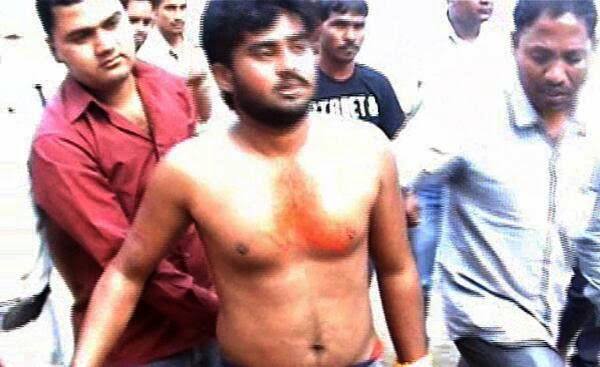
[Picture Courtesy: Hindustan Times]

An engineering student jumped into a tigers' enclosure in a Gwalior zoo this Monday. Taking off his shirt, he then entertained a pair of tigers with a private dance. This youth has been identified as a representative of a million other engineers like him who are in a constant need to remind everyone they inhabit a world outside of Is-this-Mohr's Circle-nonsense-in-the-syllabus. To many others, this might be seen as either a desperate attempt at seeking attention, or a random act of buffoonery. But we engineers know this is but just another manifestation of our keen sense of adventure that we carefully nourish over a period of four years - unless you are given seemingly polite monikers like ATKT ka Raja, in which case years cease to be anything more than a mere integer.
Contrary to popular belief, daredevilry comes easy to the common engineer. This is more commonly known in engineering parlance as "Enter the canteen." Let's get real. It was no miracle that our friend escaped unscathed after spending close to forty minutes before those tigers, apparently called Luv and Kush. This is what had really transpired after the engineer accosted them:

Tiger Luv - "Hey look, chunky food is here. *slurp*"
[The beasts advance towards an unsuspecting engineer]
Tiger Kush - "Wait. Why do I smell watery spinach?"
Tiger Luv - "He must be an engineer. I have heard tales of their canteens. Umm, not hungry any more."
Tiger Kush - "Ditto. Much ado about nothing, hmmpf. Let's just watch him dance...oh, no!"

Of course, facing two tigers is a formidable prospect. But then our engineering friend has been through more. VIVAS, for example. You can pronounce it the way you like, but this word never sounds pleasant. What happens inside a VIVA hall doesn't feel any better either. Imagine lining up in groups of three, anxiously awaiting your turn to get exposed as the chap who landed this course only because, well, "Papa told me." To make matters worse, every group will ask the preceding group "Hey, what were you asked?" only to find out that the professor would never repeat his questions. And God forbid, if you are one of those Smart Alecs who hummed their way through all lab sessions, because, "Hehe, group work," you have so had it when a surprise announcement in the finals states that every student will perform his experiment individually. As our professor once said, "Lab work is team work. It is not some pooja that one person will hold the pooja thali and the others will just touch his elbow."

The engineer doesn't have it easy outside the college premises either. For a new challenge is lurking somewhere round the corner. We call it SOCIALIZING. Consider this: the poor fellow is sitting at home during a study break. The parents have to attend a social do. The engineer contemplates an evening all to himself - some quality "me" time before his laptop. News suddenly pours in that the hosts have learnt the engineer exists and that the parents must totally bring him along. Dragged to the dinner with an assurance that "We just have to eat and come back, beta", he is now strolling around the party lawns, probably examining the lights and wondering what diodes lie behind them. Other guests accost him, prodding him to make conversation.

"So, nice party, eh?"
"Meh."
"So what are your hobbies?"
"I am an engineer. My hobbies are writing tutorials, online chatting and..."
"Come, let's get some dinner."

If the conversation is with a girl, the conversation begins and ends somewhere around "Hi I am an engineer baby are you receiving the signals being sent from the transducer of my heart."

Everyone went about asking what happened to the engineer finally inside that enclosure? It is absurd that nobody bothered finding out what happened to those tigers after spending forty minutes with him. Rumour has it the engineer had not slept in four days. With the overwhelming burden of an entire society on his shoulders, it was gracious of the engineer to afford them a little dance. My message is to the tigers: when you are met with an opportunity as rare as this, sit back and behave yourselves. You are lucky to have got an audience. You are not going to see him again until the next semester.

Thursday, November 14, 2013

The One Question Sachin Tendulkar Cannot Answer


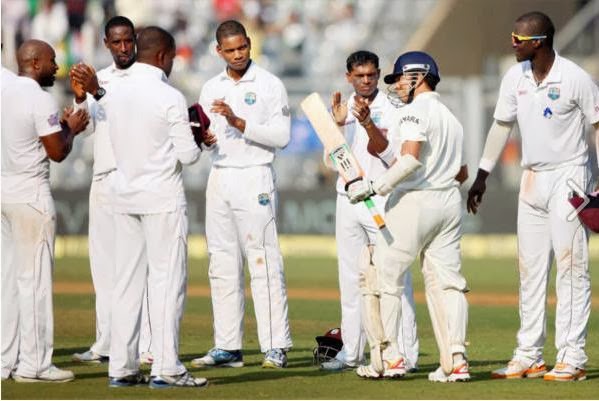
Miles away from Bombay, I was stirred last evening by a loud roar. India had lost its second wicket at the Wankhede. A predominantly Indian crowd was cheering at the fall. This was not unexpected. Nor was the cold wave of nervousness that I stayed engulfed in for the next two hours. I had felt this chill often over the last twenty years.
The giant screen at the stadium yelled, “DON’T EVEN BLINK!” Not today, I didn’t. In fact, I never blinked when the great man batted. Did they not know I was the boy my mother always thought was obsessed with his hero? Over the last few months, her theory was disproved. The hero was an international obsession.

When Sachin Tendulkar came out to bat one final time, seemingly unfazed by the hysteria around him, my pulse dipped. I did not care what he was going through. He knew better about dealing with pressure. But I have never known how to deal with the agony every time he has walked off the field. Yesterday, I noticed this more than ever before. ‘Watch him play one last time,’ I told myself; instead, I lost context and travelled back in time.

1992:
I knew little about cricket, except that I knew his name. My father had told me about a boy called Sachin who had recently taken the wind out of an English team’s sails at Old Trafford and was on his way to doing something similar with the Australians in Sydney. I was made to watch the game. Ravi Shastri walked down the pitch to congratulate this boy as he raised his Power-labelled willow to acknowledge the applause. The image still lingers. 

I began following the game because I was intrigued by Tendulkar. The World Cup followed. India disappointed, Tendulkar did not.
Yes, for me, Tendulkar had already become bigger than the game.

1993:
The blistering form continued. My faith was reiterated. I returned from school one afternoon, I had won an inter-class elocution and I needed to tell my folks. But Tendulkar had scored 150 against England and was going strong. I forgot all about my victory, it did not feel important any more. He lasted only another fifteen runs. A tacit home rule was soon implemented. I was to take ill every time India played a cricket match. I would watch Sachin bat, then recover miraculously, and then be driven to school. My parents did not mind, my teachers pretended to not observe my sickness patterns. That summer, I enrolled in a cricket camp, where our coach often asked us about our inspiration. ‘Are you kidding me?’ I always wanted to ask in response.
The answer was plain obvious.

1994:
I was nursing a fever. I was upset because it was Holi and my illness meant I was not to partake in the celebrations. Sidhu took ill as well, Sachin Tendulkar replaced him, scored a memorable 82 against New Zealand and changed the face of Indian cricket forever as he sealed his spot as an opener.
It was the best fever I ever had.

1996-1998:
The images from this period are somewhat blurred. He was the star of the World Cup, only to once again be let down by the rest of the team that did not really matter to me. Later, his captaincy invited some negativity from the media. I lost faith in the media but never lost faith in him. He peaked again in 1998 at a time when we had just moved to a new house. We had not unpacked, but a television was plugged in with urgency because Tendulkar was now plundering Pakistan in the Independence Cup. My board exams were nigh, but I could not care less. 95 off 78 balls, 67 off 44 balls, 41 off 25 balls, this man stopped at nothing. The board exams were taken sincerely, all was well.
He resurfaced in Sharjah as if to say, ‘You have been a nice boy, let me treat you to some wonderful sixes over these bowlers’ heads.’

I still watch Youtube videos of those two innings, and I pause the clip at the instant I hear Tony Greig scream, ‘What a player…that’s gone miles, it’s dancing on the roof!’

1999-2001:
Sachin Tendulkar lost his father during the World Cup. Surely, everyone felt his pain. But we had still not measured his true courage. I had seen it in the movies. The wounded hero returns to the warfront to avenge his circumstances. Tendulkar replicated every inspirational legend we had ever heard in a single innings against Kenya.
Against yet another World Cup failure, against the match-fixing scandals that riddled our motivation towards the game, against the chaos in my teenaged mind, Tendulkar continued to give me hope. Whatever may have been the question, Tendulkar was always a reasonable answer. When he became the first man on the planet to cross 10,000 runs in one-dayers a year later, I finally began to wonder:
Was this the final countdown, or was it just the beginning?

2003-2007:
Sachin Tendulkar’s promise of performing in World Cups continued and how. The ‘beta aur baap’ legend followed the smoothest six ever hit off a fast bowler. A mistimed shot in the final match was an anti-climax; pictures of fans in tears flooded the news headlines the next morning. A double century a year later at the SCG, and the World Cup was forgotten.
Darker times beckoned. I did not know what a tennis elbow meant, except that it potentially meant the party was over. Or so the critics seemed to suggest. Fake articles announcing that Sachin Tendulkar had called it a day were doing the rounds. He returned yet again – 93 off 96 balls against Sri Lanka – and let everyone know that he was altering not just the nature of the game but also his own destiny. India faced a most ignominious ouster from the 2007 World Cup. Critics lunged at him again. For once, I had no means to snap back at whoever said, ‘This guy should just retire now.’ But with the series that followed against England, his return to form ensured I did not need to bother any more.
I had got my answer. This was but the beginning.

2008-2011:
‘Impossible is nothing,’ he said in an Adidas advert. He meant every bit of it. Centuries galore in Australia, a series win in the ODIs driven by his remarkable scores, and that near-impossible Test victory against England that rode on the back of his tribute to the victims of the terror attack – the hero had now transcended all realms of reality. Two months before he created history with that ODI double century, a friend asserted, ‘I do not think this man can ever go wrong. The only time he can fail going forward is when he chooses to.’ He said it had been his dream to lift the World Cup. I wonder if he saw that he was speaking on behalf of a million others…

…I was snapped out of my reverie. Back to Wankhede. Tendulkar struck that familiar straight drive off Sammy. Of course I will continue to cheer for him over the next four days. But how do I detach myself from this memory? This is one question even he doesn’t have the answer to.


Saturday, September 14, 2013

The Economics Of Heartache

While recently conducting a survey as part of my research on the next book, I asked around what the youth thought were their burning issues today. (I don't actually use all this research, but it makes me feel smug). Around seventy-one per cent* responded with "Heartache". At the outset, this response can be promptly classified into one of frivolity or inadequacy of pathetic life experiences. Especially if it comes from teenaged boys whose moustaches still look like they are made of goat fur. But if I delve into my own enriching years that belie my youthful countenance, I realize heartache is a real and potent wreckage of the mind. Worse, it is cyclic and permanent.
I must have been fifteen when I was first victimized. I didn't even have goat fur for a moustache, although some semblance had been offered thanks to a razor that otherwise lay useless in my Biology class' dissection kit. A friend who had been through the drill suggested I cope up by locking myself in a room and play intense music on a guitar to purge out the sadness. It sounded like a great idea, except that I didn't know how to play a guitar. Ronnie from school lent me his Gibson very kindly. I learnt a few chords, played intense music, so intense it snapped Ronnie's guitar strings. The heartbreak was successfully transferred to Ronnie, I had found my catharsis and had thought I had conquered a wounded heart.
But it always came back. In the alienation from a social circle, in the job that did not get me a Jaguar, in a dream yet unrequited, in Sachin Tendulkar's retirement, in the Zanjeer remake. Well, what doesn't kill you only shows you a pattern. The presence of hope lying beyond dismay. The realization that bad as it may have gotten, there can be worse later. The relief that your neighbour's unhappiness is bigger than yours. The empathy for the person who chose to end it all with one big leap, who chose not to wait for the happy interludes in the ballad of distress.
Wait for the happy interludes. They don't just give hope. They give us a sense of humour, and if we get that far, they also help trivialize a heartbreak of the past. I guess this is our best shot at countering it. For when we look in the mirror, the stubble will have thickened. And soon it will grey. But despair will continue to peer over our shoulders, challenging us to make the next move.

*Just corroborating my argument with a useless statistic.

Saturday, August 10, 2013

Why So Serious?

Rohit Shetty can never have it easy as a maker of comedies. Being humoured, unlike other states of mind such as outrage, idiocy and the recently discovered poverty (Poverty IS a WHAT?), is a tricky affair to understand and there is no science to it. Making a joke is a difficult art, because your joke has varying standards set against it before it is dispensed and it is nearly impossible to cater to your recipients' myriad tastes.
Imagine the perils of being a stand-up comic, for instance. Firstly, there are far more people who want to stand up and deliver comedy than those willing to sit down and receive it. Not more than a tenth of these comics probably read into their audience's psyche before making a joke. Secondly, the audience's psyche is way too complex to make sense of it, which is why a whole lot of jokes fall flat much to the teller's embarrassment. Admit it. Your childhood has most certainly been riddled by that one birthday party where your mother coaxed you into telling "that chutkula" and the only trickle of claps that followed were from your mother.
Being successfully funny is subject to various factors such as socio-cultural sensitivities, tone modulation and the innate human desperation to run down anyone who has found a podium to showcase his talent. The kind of adverse reactions one has to often face from one's audiences arguably explains why the best of comedians have seldom smiled in their personal lives - prime examples include Ben Stiller, Charlie Chaplin, Paresh Rawal, Sreesanth, etc. Of course, some comedians are to blame too, for they carry the same joke wherever they go. Consider the "How do you put a giraffe into a fridge" gag. It might work with Indians. Europeans will find it bizarre. The Chinese might run away mid-narration in search of a camera so they can photograph the giraffe. The Americans won't get to hear your joke because you will likely be detained at an airport because of your fetish for placing suspicious objects in fridges.


Maybe, as many an expert might argue, the safest option for a comedy is to be topical and relevant to existing issues. And maybe Rohit Shetty could consider paying heed to such a suggestion.After all we have so many hot subjects to choose from daily: Narendra Modi, Rahul Gandhi, #Feku, #NaMo, #RahulBaba...But Rohit Shetty knows better. He defines his genre, opens it to you for acknowledgement, and does so pretty successfully more often than not. He plays to his strength, which is pure, low-brow entertainment at the cost of logic. With Chennai Express, he goes an edge gutsier by bringing in Shahrukh Khan who is your average Joe's favourite punching bag (dissing whom is never going out of vogue). So, yes, he gives you a car that can be somersaulted by a human fist. He can get a blind man to read you the time. Diwali is spelt 'DDLJ' in his world. You are free to enter or stay off limits.
The world is pissed off. It needs to be made to laugh. If you are looking for polished humour, there are enough artists playing to your gallery. For many others, there is Rohit Shetty. Neither can grudge the other his choices. 


Saturday, August 03, 2013

Tutored By The Temptress


‘An ideal story is the one that writes itself,’ Nakul signed off at the conclave, swaying between flippancy and intensity. Being flippant came easy to him, as would vouch his family, friends and others who were neither of the other two. What else would you say of a young man in a conservative Indian society, who renounced a plush job for the dark labyrinths of a writing career? His parents reckoned they had been too soft on him; he had not seen hardship. The value of financial security eluded him. To Myra, the woman who had claimed to know him better than he knew himself, this was a tactic to evade their wedding nuptials. He would have her examined for paranoia, but that could wait. At this time, he was not willing to barter his dreams for social approval. Today, the acknowledgement he received at the Young Turks’ Literary Conclave in Switzerland seemed to answer his detractors.
‘This is only the beginning,’ argued Cecilia, between mouthfuls of her secret recipe of the evening. ‘And don’t bother answering your detractors. Vengeance is but a constriction en route creativity.’
Nakul nodded politely. Inwardly, he marveled at the girl’s dexterity with words. He also decided she was remarkably intelligent for a housekeeper at a countryside bed-and-breakfast. She was amused when he opened up to her about his notions, later that week. In his defense, housekeepers in India were not perceived to be intelligent. A person’s capabilities were judged per the choices he made.
‘Your choices are your fetters,’ she laughed. He was inadvertently drawn to her as she regaled him with stories of her limited choices; the orphanage she had grown up in had been kind, but not inspiring. When she took a liking to demonology, she was banished from the orphanage and ostracized by the local church. With meager belongings and fewer choices, she set out in pursuit of her passion. It had been a mad long journey, and she was still traveling. Scathed, and her financial condition leaving a lot to be desired, she was still content with living her dream. She told him of her recent adventure - the exorcism of a middle-aged farmer in a Scottish village. What looked visually devastating proved spiritually enriching for her.
The morning he was leaving, she walked him to his cab. He did not want to go. She had inspired him when no one else had shown a semblance of conviction in his decisions.  She leant into him and kissed him. He remembered the firmness in her eyes as she said, ‘If you find my inspiration worked wonders, come back and tell me how.’
Once back home, he started writing his first novel. To his dismay, he did not have a story on him. He sat doggedly at a corner of The Bombay CafĂ© for weeks at end, staring out the window, watching people pass by, scanning their motley expressions for a stroke of motivation. But nothing yielded.  He could not get over his memories of an unfaltering Cecilia, and the diktat of fulfilling a dream she had issued to him. Possessed by her, he spun a story around a young Indian’s rendezvous with a demonologist he fell in love with – a story that found few takers in the market.  When a dying publication sourced his manuscript with a frail attempt at redeeming its business, its owner fell in love with the outlandish plot and decided to publish it.
A year later, Nakul had found readers aplenty. His debut project, Tutored By A Temptress, had recorded massive sales and myriad responses that ranged from awe to vitriol. He had detached himself from the story the day he had launched it to market; the woman he had attributed it to seemed to have been an illusion. The emails had all bounced back. The phone number he had was now out of service. But when he was couriered the program booklet for the upcoming Frankfurt book fair, he was left reeling. The brochure, in its listed bestsellers, had pipped psychologist Gerald Bond’s “Meandering Minds” on the top spot. The synopsis talked about the doctor’s tryst with a certain Cecilia Gomes, whose imaginative identities had shown her around the world. Last found in a gypsy band traveling across the African deserts, she was previously known to be an aspiring demonologist who had fallen hopelessly in love with a young Indian who had taught her how to smile. Of the countless cases of multiple personality disorders that he had encountered, this one stunned him with the rapid changes he saw in this woman…
Nakul flung the brochure on his bed with a trembling hand. Somewhere, he heard his own words ring out loud: ‘An ideal story is the one that writes itself…’